
Woodbridge: How Italian Immigration Helped Shape a Community
From a mill village on the Humber to one of the most Italian places in the Greater Toronto Area — how four generations of immigrant families built Woodbridge.
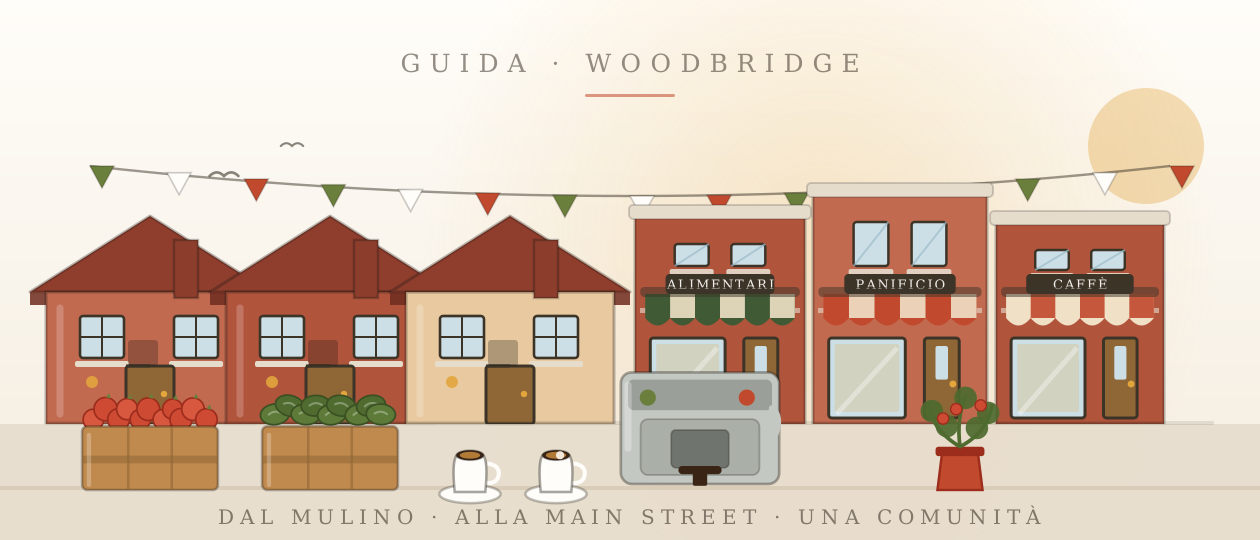
If you drive through Woodbridge today, it is easy to find reminders of Italy. Italian restaurants, cafés, bakeries, specialty markets, social clubs and community organizations are part of everyday life.
But Woodbridge was not always known for its strong Italian identity.
The story of Italian Woodbridge is largely a story of immigration, family, hard work and the search for a better life. Over several decades, generations of Italian Canadians helped transform the community and create one of the most significant centres of Italian heritage in the Greater Toronto Area.
Before the Italians: The Origins of Woodbridge

Long before Italian families began arriving, Woodbridge had already developed as a small Ontario settlement.
The community grew along the Humber River, which provided both transportation and power for early industries. Rowland Burr is credited with establishing the settlement in the 1830s, developing a flour mill, sawmill and textile mill.
Originally known as Burwick, the community was renamed Woodbridge in 1855. By the late 19th century, it had developed into a small but active village with businesses, churches, schools and local industries.
For much of its early history, Woodbridge was closely connected to agriculture and the surrounding countryside.
Then, after the Second World War, the community began to change dramatically.
The Arrival of a New Generation of Italians

After the Second World War, Canada experienced a major wave of immigration from Europe. Thousands of Italians arrived in Ontario, many coming from regions including Calabria, Abruzzo, Campania, Basilicata, Sicily, Veneto and Lazio.
Toronto became an important destination.
Many Italian immigrants initially settled in established neighbourhoods closer to the city, including areas around College Street and St. Clair Avenue West.
But as families became more established financially, many began looking for something that was difficult to find in the older city neighbourhoods: more space and the opportunity to own a home.
Woodbridge offered both.
Academic research on Italian Canadian settlement describes how Italian families gradually moved north and northwest from Toronto into suburban communities, including Woodbridge. Home ownership became an important part of this transition, reflecting the desire of many immigrant families to build a permanent life in Canada.
The 1950s and 1960s Changed Woodbridge

The transformation accelerated during the 1950s.
According to the City of Vaughan's heritage documentation, Woodbridge's population tripled during the 1950s following an influx of immigrants, predominantly Italian, after the Second World War. New housing developments were built to accommodate the growing population.
For many families, buying a house represented much more than simply finding somewhere to live.
It meant stability.
It meant bringing family members together.
It meant having a garden, a place to grow tomatoes and peppers, somewhere to make wine or preserve food, and eventually a place where children and grandchildren could grow up.
The suburban house became an important part of Italian Canadian life.
And Woodbridge became one of the places where this new chapter unfolded.
From Houses to a Community

As more Italian families settled in Woodbridge, businesses and community organizations followed.
Grocery stores began carrying familiar Italian products. Bakeries and cafés became gathering places. Restaurants introduced generations of Canadians to regional Italian food.
Social clubs were also important.
Italian immigrants often maintained strong connections to the towns and regions they had left behind. This led to organizations representing particular communities and provinces of Italy.
In Woodbridge today, that history can still be seen through organizations connected to places such as Basilicata, Veneto, Irpinia, Messina and other parts of Italy.
For example, the Basilicata Cultural Society of Canada continues to preserve the traditions and heritage of the Lucani community, while the Veneto Centre serves as an important gathering place for people connected to Veneto.
The Ciociaro Social Club is another example of how regional Italian identity became part of the community's social life.
These organizations helped immigrants maintain connections with their hometowns while building a new life in Canada.
Italian Food Became Part of Woodbridge's Identity

Food was another important part of the story.
Italian families brought recipes, traditions and techniques from home. What started in family kitchens eventually became part of the wider community.
Today, Woodbridge has an extensive Italian food scene, from traditional trattorias and restaurants to specialty food stores.
Places such as Cataldi Fresh Market Inc. continue the tradition of Italian grocery shopping, offering imported products and specialty foods in the heart of historic Woodbridge.
Family-run food businesses have also played an important role in preserving regional traditions. Sapori Italiani, for example, has roots in Calabrese-style food production and traditional Italian salumi.
And the restaurant scene reflects the same evolution, with establishments ranging from traditional Italian dining rooms to newer restaurants combining Italian traditions with contemporary ideas.
A Community That Continues to Change

Woodbridge's Italian identity has never been completely static.
The first generation of immigrants largely arrived from Italy themselves. Their children grew up between two cultures, speaking English at school and often Italian or an Italian dialect at home.
The third and fourth generations have an even different relationship with Italy.
For many, Italian identity is no longer primarily about immigration. It is about family history, food, language, traditions and memories.
At the same time, Woodbridge itself has become increasingly multicultural.
The City of Vaughan describes the area as having residents from many different backgrounds and languages, while recognizing the important role Italian immigrants played in the city's development. In 2026, Vaughan again marked Italian Heritage Month, highlighting the contributions of Italian immigrants to the community.
The result is a community where Italian heritage remains highly visible while existing alongside many other cultures.
More Than Little Italy

When people think about Italian Toronto, they may immediately think of Little Italy or Corso Italia.
But the story did not stop there.
As Italian Canadians became more established, many families moved beyond Toronto's traditional Italian neighbourhoods and into the suburbs.
Woodbridge became one of the most important destinations in that movement.
Research published through the University of Toronto's Italian Canadiana journal notes that by the late 20th century, Italian settlement was particularly concentrated in communities such as Woodbridge, where the Italian population was significantly larger proportionally than in many of Toronto's traditional Italian neighbourhoods.
That movement helped create the Woodbridge we know today.
Italian Woodbridge Today

Walk through Woodbridge today and the history is still visible.
You can hear Italian spoken in cafés and shops. You can find products from different regions of Italy in local markets. You can eat pasta, pizza, salumi and regional dishes. You can find social clubs preserving traditions from specific Italian towns and provinces.
And perhaps most importantly, you can see how the culture has passed from one generation to the next.
The Italian community that developed in Woodbridge was built by people who arrived with very little, worked, bought homes, raised families and created businesses and organizations.
Their children and grandchildren inherited more than recipes and surnames.
They inherited a connection to a place they may never have lived, but which remains an important part of their family's story.
That is what makes the history of Italian Woodbridge so interesting.
It is not simply a story about Italians coming to Canada.
It is a story about how immigrants helped make a place their own, while becoming part of the much larger Canadian story.
Discover Italian Woodbridge
Today, Woodbridge remains one of the best places in the Greater Toronto Area to experience Italian Canadian culture, from restaurants and specialty food shops to cultural organizations and community events.
And while the community continues to evolve, its Italian roots remain an important part of Woodbridge's identity.
Discover more Italian places, businesses and experiences across Ontario with ItalyGo.
More from Guida
 Guida
10 Pasta Places in Ontario Worth Adding to Your Italian Food List
From handmade pasta in Toronto to Italian favourites in Mississauga, Grimsby and Kitchener — ten places worth discovering.
 Guida
A Day on Toronto's Little Italy: A Walking Guide
Where to get espresso before 9, where the nonnas shop, and where dinner ends with a frozen ceramic glass of limoncello.